
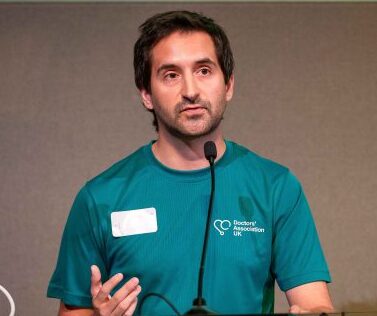
A local doctor in Conwy has warned that cold homes are putting patients at risk of infections.
Energy bills for a typical household are forecast to rise by 26% from January, with regulator Ofgem due to announce its new price cap on Wednesday.
Experts fear this will push more people into fuel poverty. Citizens Advice estimates that more than half a million households will run out of prepayment meter credit before mid-February. One in three adults is currently in debt to an energy provider.
Dr Matt Lee, a doctor at Betsi Cadwaladr University Health Board, says the problem is common.
“It isn’t unusual to come across patients whose homes have played a factor in their admission to hospital,” he says, “if their heating has broken and they’re living in a council house, for instance, and there’s delays in getting that fixed.”
Parts of North Wales were among the UK’s coldest neighbourhoods, according to 2022 data. Old Colwyn and Llanddulas was named the coldest neighbourhood in Wales, and Rhyl North in Denbighshire was the second-coldest. A new analysis by the Health Foundation found North Wales had some of the highest rates of fuel poverty risk in the whole of the UK.
Around 18% of Welsh homes contain ‘Category 1’ hazards like damp, cold and mold, according to research published by the Welsh government.
Public Health Wales estimates that health problems from cold homes in Wales cost the NHS £41m a year.
While a cold environment on its own doesn’t generate viral illnesses, Dr Lee explains, what it does do is make immune systems more vulnerable by putting additional stresses through the cardiovascular and respiratory systems.
If there’s damp within a house as well, then that can contribute to mold spores being generated, which can exacerbate existing respiratory illnesses.
“Doctors are absolutely worried about the conditions that patients are living in, and it’s something that we take a holistic approach to around patient care,” he says. “We want to make sure that the environments that patients are in are keeping them safe. We know that that’s not the case across the UK, and that contributes to health implications for particularly vulnerable patients: children, babies, those with pre-existing conditions, and older populations.”
In particular, cold environments typically push people together in closer proximity, he says: “That’s what generates that spread of viral illness that makes winters so difficult within the healthcare system, and that’s why illnesses spread so quickly.”
“People can actually be living in homes that are really cold in the middle of winter, with only a small heater to try and keep whole families warm,” he says. “That’s not unusual, and contributes to presentations to hospital because of respiratory illnesses.”
Cold homes also affect patients’ diets, Dr Lee warns.
“They can exacerbate existing health problems and also widen health inequalities as well,” he says.”If people are having to spend even more money on heating very energy inefficient homes, they have less money to spend on other essential goods such as food.”
Some 14% of Welsh households were estimated to face fuel poverty in 2021.
Dr Lee warns that the changing climate will make winters across Wales more difficult as the winters get wetter and flooding risks increase.
“Last year the floods in Monmouth were catastrophic, but they are only going to get more common and more extreme,” he says.
Climate projections from the UK Met Office indicate that on average, winters will continue to become wetter and summers drier, though natural variability will mean we will continue to see individual years that don’t follow this trend.
So far North Wales has faced two named storms this autumn and winter. Storm Boelo brought gusts of up to 84mph last month with flood alerts across the region. Flash-flooding warnings began to arrive in August.
Drier summers are likely to mean more wildfires, he says – something he and many other people in Wales have already experienced.
“I could actually see one of the wildfires from my house, which was a pretty terrifying prospect – so much so that I packed an evacuation bag just in case we needed to leave at very short notice.
“The more that these extreme weather events transpire, the more we need to ensure that our homes and our facilities, including our healthcare facilities, are fit for purpose to cope with any environmental conditions that they face.”
Dr Lee says he hopes more patients will be able to insulate their homes, both to protect their health and to save money. In Wales, a third of cavity walls are uninsulated.
“We know that home insulation is really something that does make a massive difference to ensuring heating bills come down and ensuring that patients stay warm during the winter,” he says. “the other important thing about insulation is that it doesn’t just keep people warm; it can also work really well at keeping heat out of buildings during the summer. It’s a win-win.”


